Do not forget Minab
From London to Tokyo, voices rise for 120 young victims
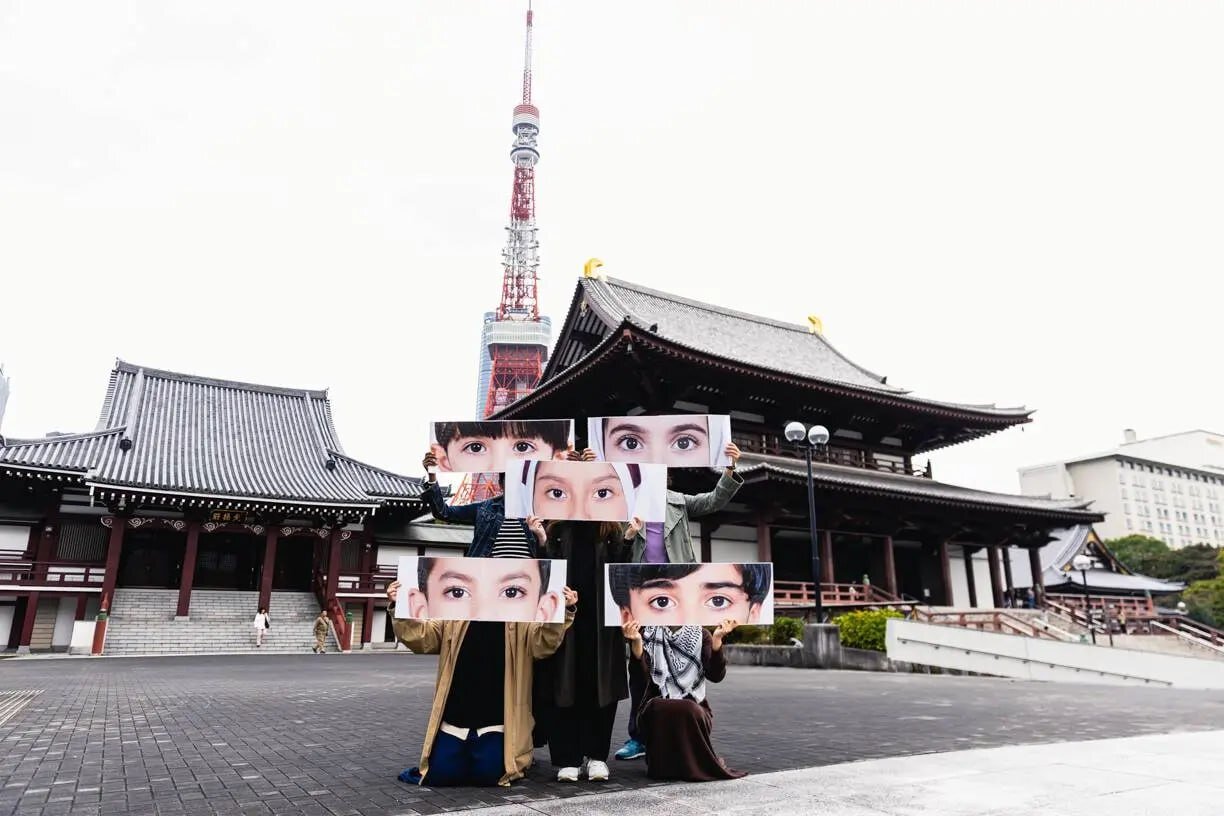
TEHRAN – Coinciding with World Children’s Day on November 20, an international campaign under the hashtag #RememberMinab has taken the story of the school children killed in Minab to streets, metro stations and public squares from London to Tokyo, organizers and participants say.
The campaign, described by its supporters as a cultural and commemorative initiative, has included street exhibitions, photo displays, artistic performances, memorial gatherings and symbolic actions in several countries, with the stated aim of honoring the victims, drawing international public attention and preventing their names from being forgotten.
London: empty chairs and a book of memories
In London, a street memorial exhibition was held with empty chairs placed in public space, alongside school bags and photographs of the Minab students.
Organizers said the symbolic installation was intended to picture the absence of children who will never return to class. A memorial book was also placed at the site, where passersby wrote messages of sympathy and solidarity, turning the exhibition into a space for human messages.
Pakistan: Minab’s name on the seashore
In Pakistan, a pro-resistance activist wrote #RememberMinab on a sea beach in a symbolic gesture of support. Video of the act was widely shared on Iranian media and social networks, becoming one of the most visible media moments of the campaign.
Writing the name of Minab on the sand was a simple but meaningful act that drew the attention of a wide audience to the memory of the children and carried the campaign’s message beyond borders.
Los Angeles: vigil in front of the consulate
In Los Angeles, supporters held a memorial gathering in front of the Israeli consulate. Participants said the vigil was organized to commemorate the Minab students on World Children’s Day and to call for their story to be heard internationally and for accountability.
The Hague: faces of the victims on display
In The Hague, Netherlands, a photo exhibition of the Minab students was organized as part of the campaign. Photographs of the children were put on public display to introduce visitors to their faces and memories, in an effort to draw European public attention through the language of images.
From Tokyo to Paris: eyes of Minab, metros and candles
In Tokyo, an art performance titled “Eyes of Minab” was staged. Images of the eyes of the Minab children were displayed on city sidewalks, confronting Japanese passersby and prompting reaction and conversation. A Japanese activist addressed the event, condemning the attack and speaking about the suffering of the schoolchildren. Participants described it as a quiet, voiceless message that such events must be remembered, with one saying all people wish for peace and another expressing sorrow and hope that people in Iran and around the world can live in peace and safety.
In Berlin and Frankfurt, photographs of the Minab students were displayed in metro stations, placing their faces before commuters in daily urban space and bringing their memory into everyday city life.
In Paris, a memorial ceremony was held in front of the Eiffel Tower. Participants lit candles, held a vigil and displayed photographs of the victims in one of the French capital’s most recognizable locations, emphasizing the need to keep their memory alive.
what happened in Minab?
The campaign refers to the February 28, 2026 airstrike on the Shajareh Tayyebeh elementary school in Minab, Hormozgan Province in southern Iran, which occurred on the morning of the first day of the U.S.-Israeli war on Iran.
168 people — including students, teachers, school staff and some relatives — were killed when at least three missiles struck the school grounds and buildings during an attack on nearby facilities. The Minab prosecutor later gave a breakdown of 156 dead, including 120 students — 73 boys and 47 girls aged 7 to 12 — 26 female teachers, 7 parents, a driver, a clinic worker and an unborn child. Iranian officials say around 300 surviving students continue to suffer severe psychological trauma.
Amnesty International, drawing on satellite imagery, videos and interviews, concluded the school building had been directly struck and that more than 100 children were among those killed. A UN-backed fact-finding mission recently said there were reasonable grounds to believe the U.S. Tomahawk strikes, including the one that hit the school in Minab, constituted war crimes. U.S. Defense Secretary Pete Hegseth has said an investigation is ongoing.
Iran’s UN mission, the Iranian Red Crescent and senior military officials have called for an independent, transparent investigation, accountability and compensation, stressing that schools are protected under international humanitarian law as long as they retain their civilian character.
Leave a Comment